Introduction
I personally developed the poker game app “Exotic Poker” and released it on the Google Play Store on February 3, 2026. Here’s the link to the Google Play Store:

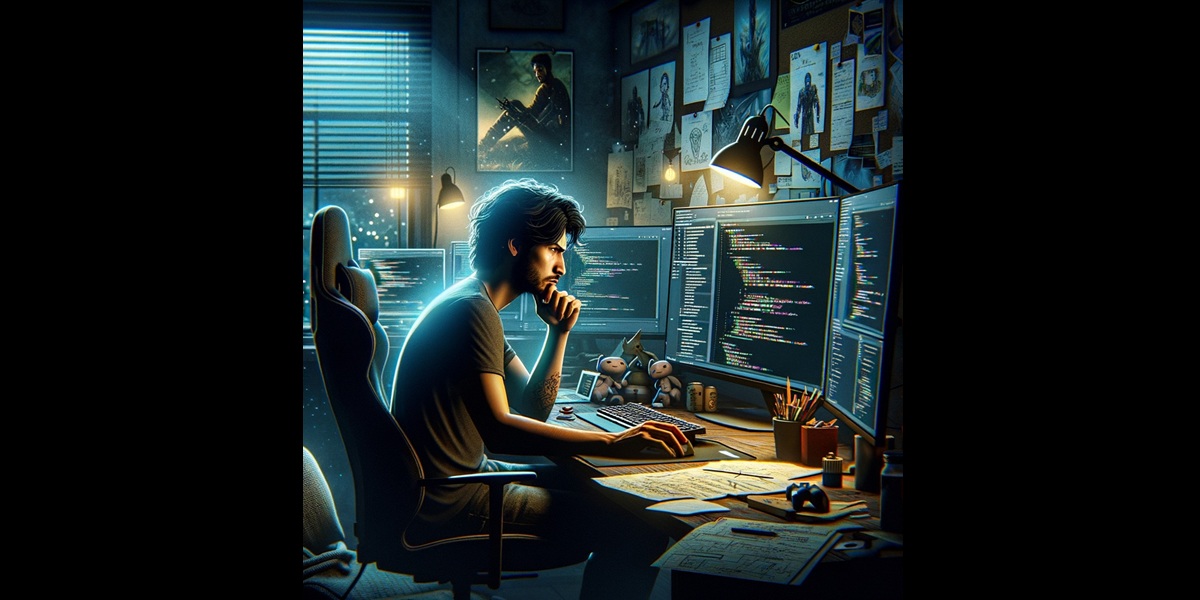
Compared to developing RPGs, strategy games, or novel games, developing a poker game app is easier because the rules and mechanics of the game are more clearly defined and there is no room for change. However, developing a game on your own can still be difficult and can be almost arduous. In this article, I will briefly summarize my impressions of developing a game on my own and the difficulties of developing a game on your own that I have seen on the internet and YouTube.
You Need to Handle all the Work Yourself
It seems that most individuals who think about making their own game lose motivation and abandon their idea within about a week of starting. The common pattern is that they lack programming skills, or even if they can write program code, they don’t know where to start, time passes, and they end up accomplishing nothing.
Before actually starting work, you need to clearly define what you will do—and what you won’t do. You require project management skills to identify as many tasks as possible needed to complete the game and then systematically tackle each item one by one. Such skills are rare for individuals working alone, even among professionals. Even those developing software rarely grasp the entire source code of the software they work on. Typically, they develop only a part of the whole and somehow end up with the system functioning as a complete entity. It’s safe to assume most working adults never experience completing an entire project single-handedly.
Conversely, people whose job is project management often find themselves unable to actually do the work themselves. Project management fundamentally involves assigning tasks to others and delegating responsibility. However, when developing a game individually, you must handle every identified task and schedule item yourself. Some might despair upon realizing they must execute every task themselves, even after creating a perfectly polished plan and schedule.
Regarding the question of where to start when developing a game, I believe it’s best to complete the core game logic first. Graphics, BGM, scenarios, and effects are like the meat you add to the skeleton of the core game system. Trying to add meat without a skeleton will likely result in something disjointed (though this might not be the case for those who are experienced and have a clear vision of what they’re creating).
Wouldn’t it be better to first build a system driven solely by its core mechanics and check if playing with those mechanics is actually fun? Even without graphics, BGM, story, or effects, the core mechanics often form a solid foundation for what can be called a game. Personally, when I started developing, I began by creating a command-line poker game without a graphical interface. Only after that was working did I move on to developing the graphical user interface.
Completing It Is Difficult
I mentioned that starting development with a plan is inherently difficult, but once the environment is set up and development gets on track, progress on a game that looks and feels like a game starts to happen. Some people might even find this process enjoyable. Even so, a huge wall seems to stand in the way before you can actually complete and release the game.
The most common problem is development not progressing according to plan. If technical knowledge is lacking, work can fall increasingly behind the initial schedule. It’s common for code to not function as intended, or for days to be spent trying to pinpoint why the app crashes. Giving up on development, overcome by despair thinking “When will this task ever end?” is a frequent pattern.
Another common problem is discovering during development that the game’s original design or specifications are contradictory, making it fundamentally unplayable. This is the state commonly referred to as “hit a wall.” Once you reach this point, it’s game over without question, requiring a complete redesign from scratch. Having to discard most of what you’ve developed so far can be mentally devastating.
The final problem, one I’ve personally faced, is becoming utterly dissatisfied with how mediocre your game is turning out. Whether working solo or in a small team, developers likely start with a game they admire, driven by the desire to create something better. However, once development begins, that beloved game often looms as an insurmountable wall.
You might lose motivation because your game feels too shabby. A common approach is to add more advanced features to somehow mask that shabbiness. In my case, I originally envisioned a single-player game where you could play poker against an NPC. But when it was finished, I thought, “This kinda feels shabby, doesn’t it?” I ended up wanting multiplayer features like those in m Hold’em or Poker Chase, and ultimately decided to add them.
The result? Extended development time. What was supposed to be a 2-3 month project stretched to six months. On top of that, implementing multiplayer required using cloud services. With zero prior knowledge, I ended up fumbling through Google Cloud with a manual in hand. While it’s good it finally finished, suddenly tackling unfamiliar technology often leads to project failure, so be cautious.
They say that simply completing and releasing any crappy game, no matter how bad, gives you an overwhelming advantage over other developers in terms of experience. I think that’s probably true (after all, if you don’t finish it, your experience remains zero). Lately, I’ve come to think that humans have this nature where they can find joy just in having something running on their machine, even if it’s a piece of crap, and thinking, “What the hell is this garbage? Did the guy who made this have a screw loose?” Maybe it’s better to aim to just finish and release it, even if it looks a bit shoddy.
Not Getting Downloaded
I don’t currently know the solution to this problem, but the fundamental reality is that indie games aren’t recognized by society. Whether your goal is to make money or it’s just a hobby, a game only has value if people play it. Ultimately, even indie games need advertising and promotion to get noticed by the public. If advertising media were limited to just TV and newspapers like in the past, it would be hopeless. But nowadays, there are platforms like crowdsourcing and people like YouTubers who promote games. It’s probably worth spending some money to utilize these resources.
Honestly, when it comes to the games I’ve developed, I can’t say they’re currently at a level where I enjoy playing them every day. Expecting others to do something I won’t do myself is fundamentally flawed. First, I need to polish the app’s features until it reaches a level where I genuinely enjoy playing it daily. Once that happens, I plan to revisit and try several promotional strategies.
The Benefits of Independent Development, Despite the Challenges
Finally, let’s address the question: with all these difficulties, what are the benefits of developing games independently?
Most games circulating in the world aren’t the result of one person making it exactly as they envisioned. They’re usually the product of many people collaborating, everyone making compromises, and giving up on their “I want it to be like this” ideas. Even so, there are plenty of games considered masterpieces, and of course, some inevitably become missteps or absolute disasters.
The advantage of developing solo is that you don’t face these forced compromises. Of course, this often means the project never finishes because you refuse to compromise… But the benefit of creating exactly what you envisioned seems an irresistible charm, even when weighed against the many drawbacks.
Furthermore, for things you want to do in the future, like the author, it might become absolutely necessary for it to be a “game you own.” While researching poker (originally intending to study AI and machine learning), I developed a desire to create my own unique poker rules and make them playable by others. The only ways to fulfill this desire are to rise through the ranks at a game company to become a producer or director involved in game development, or to develop the game myself. For the author, the former option is impossible, leaving only the latter path. It’s not about the merits; the reality is simply that there was no other choice.
Ownership is also a significant benefit of developing games independently. Working for a company means trading ownership of your work for a salary. Most people probably realize this when they leave a company, suddenly discovering that the work they thought they’d built up wasn’t actually theirs. Being able to develop games as capital you own is quite meaningful, isn’t it?
With the advancement of AI services, the barriers to individual game development might gradually lower in the future. Even so, the barriers mentioned in this article won’t disappear. I think it’s best to carefully devise countermeasures and then take on the challenge.


Comments